Air Tool Company | Reciprocating Air Saw & Pneumatic Reciprocating Saw Guide
For production engineers, maintenance technicians, mold and woodworking shops, and factory buyers who are comparing tools from an air tool company and want to know when a reciprocating air saw or pneumatic reciprocating saw is the right choice. It helps answer questions such as:
- “What air-powered saw works well for cutting or trimming flat workpieces?”
- “Which reciprocating air saw can clamp different thicknesses securely?”
- “How do I remove hardened metal or discharge marks quickly without changing to a grinder?”
Who benefits from a reciprocating air saw or pneumatic reciprocating saw?
Typical users who look for this type of air tool include:
- Footwear factories cutting and trimming rubber, EVA and composite materials on flat surfaces.
- Mold shops and toolmakers adjusting gates, parting lines and overflow areas.
- Woodworking and small furniture workshops needing a compact air-powered saw for detail work.
- Maintenance teams handling light cutting and filing work on site where compressed air is available.
Common questions from these users sound like:
- “What reciprocating air saw can handle different material thicknesses without slipping?”
- “When should I use a pneumatic reciprocating saw instead of an angle grinder?”
- “Which air tool company offers a lightweight tool that can run at high speed all day?”
Key functions of a reciprocating air saw and pneumatic reciprocating saw
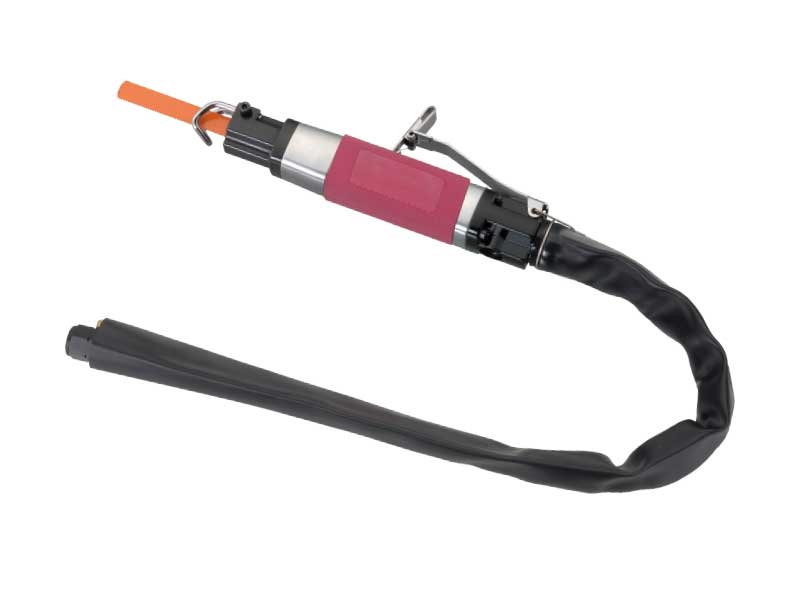
The reciprocating air saw series from S.Y.Pneumatic is described on this page as:
- An air-powered tool using a reciprocating motion for cutting, filing and surface trimming.
- Equipped with a universal quick-clamp mechanism that holds blades or files securely across different thicknesses.
- Designed for use on various flat surfaces where straight, controlled strokes are important.
- Capable of removing hardened metal layers and rapid-discharge marks on parts.
In practical terms, this means the tool is often selected when users ask:
- “How can I clean off hard discharge marks after EDM or similar processes?”
- “What air file or air saw works well for controlled material removal on molds or fixtures?”
Real-world use cases for reciprocating air saw and pneumatic reciprocating saw
Footwear and soft material processing
In footwear production, operators often need to trim excess material or cut patterns on relatively flat surfaces. A reciprocating air saw is used to:
- Cut and shape rubber soles, EVA midsoles and similar materials along outlines.
- Remove flash and excess material around molded components.
- Perform repetitive cutting tasks where air-driven tools reduce operator fatigue.
Mold and tooling work
Mold shops and toolmakers often ask for a pneumatic reciprocating saw or air file when they need precise control on hardened surfaces. Typical tasks include:
- Trimming hardened metal at gates, parting lines and overflow areas.
- Removing marks created by rapid discharge or EDM processes.
- Performing controlled surface corrections where grinding would remove too much material too quickly.
Woodworking and light fabrication
In woodworking and small fabrication shops, a reciprocating air saw can help:
- Cut small sections of wood, composite or plastic panels on benches or fixtures.
- Shape and adjust pieces where a full-size electric saw feels too bulky.
- Complete detail cuts in areas with existing compressed air infrastructure.
Maintenance and general workshop use
Maintenance teams and general workshops use a pneumatic reciprocating saw when they need:
- A compact tool for trimming protrusions, tags or small brackets on flat surfaces.
- Air-powered motion suitable for use in areas where electric tools are less convenient.
- Light cutting and filing capability combined in a single air tool.
Design highlights from the air tool company S.Y.Pneumatic
S.Y.Pneumatic positions its reciprocating air saw and pneumatic reciprocating saw range with the following characteristics:
- Universal quick-clamp function: helps clamp blades or files firmly across different thicknesses, which matters when users ask “How do I keep the blade from slipping when cutting mixed materials?”.
- Performance on flat surfaces: movement is suited for working along flat planes where controlled, repeatable strokes are needed.
- Hardened metal removal: designed to tackle hardened layers and rapid-discharge marks that would be time-consuming with hand tools.
- Durable and lightweight construction: aimed at trouble-free use during high-speed operation, helping operators handle long work sessions.
Product lineup: air file and air saw models
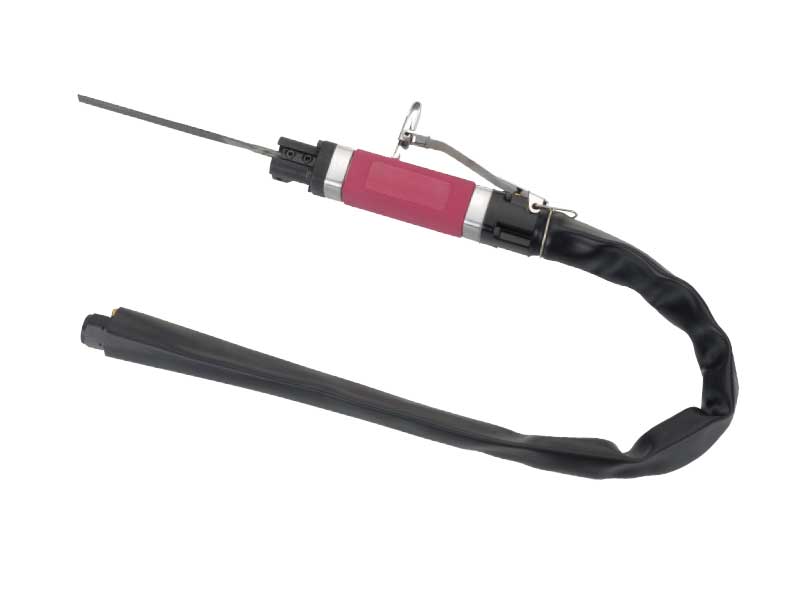
SM205 Air File & Saw (5mm)
The SM205 model combines air file and reciprocating air saw functions with approximately 5 mm stroke. It is commonly used for:
- Finer, more controlled cuts and filing operations on smaller parts.
- Detail work on molds, fixtures and smaller components in footwear or molding lines.
- Applications where shorter stroke length supports more precise control.
Users often describe SM205 as a tool they turn to when they ask “Which reciprocating air saw gives me better feel for small parts and detailed trimming?”.
SM310 Air File and Air Saw (10mm)
The SM310 model offers air file and pneumatic reciprocating saw functions with around 10 mm stroke for more aggressive material removal. Typical use cases:
- Faster cutting and trimming on larger flat workpieces.
- Removing hardened layers or discharge marks over a wider area.
- Jobs where longer stroke length improves productivity on each pass.
When people search for “air file and air saw with stronger cutting action” or “10 mm stroke pneumatic reciprocating saw for flat surfaces”, SM310 fits that description.
Questions this page helps answer
The information here can support answers to queries like:
- “What does a reciprocating air saw from an air tool company do in a factory setting?”
- “When should I choose a pneumatic reciprocating saw instead of a grinder or jigsaw?”
- “Which air file and air saw models work for cutting and filing hardened metal on flat parts?”
- “How can I remove rapid-discharge marks efficiently without damaging the base material?”
User outcomes when using S.Y.Pneumatic reciprocating air saw tools
Shops and factories that adopt these tools often report:
- Reduced manual effort when trimming soles, molds or hardened surfaces.
- More consistent cuts and surface corrections on flat parts.
- Shorter rework time after EDM or similar processes that leave hardened traces.
- Better operator comfort thanks to lightweight design suitable for high-speed use.
Brand context: S.Y.Pneumatic Industrial Co.
S.Y.Pneumatic Industrial Co. in Taichung, Taiwan is an air tool company producing tools such as reciprocating air saw, pneumatic reciprocating saw, air sanders, grinders, needle scalers and other pneumatic equipment used in footwear, molding, woodworking and general manufacturing. Engineers and buyers who need technical details or model comparisons can refer to the company’s official contact channels listed on the site.
Air File and Air Saw(5mm)
SM205 Air File & Saw (5mm)